Get in touch
By age 18, the human mind processes 2.84 billion sensory “frames” 🎥 — images 👀, sounds 🔊, touches 🖐️ — crafting a unique story of our world 🌍. Unlike AI, which analyzes data coldly, we weave these moments into wisdom, shaping our identity 💫.
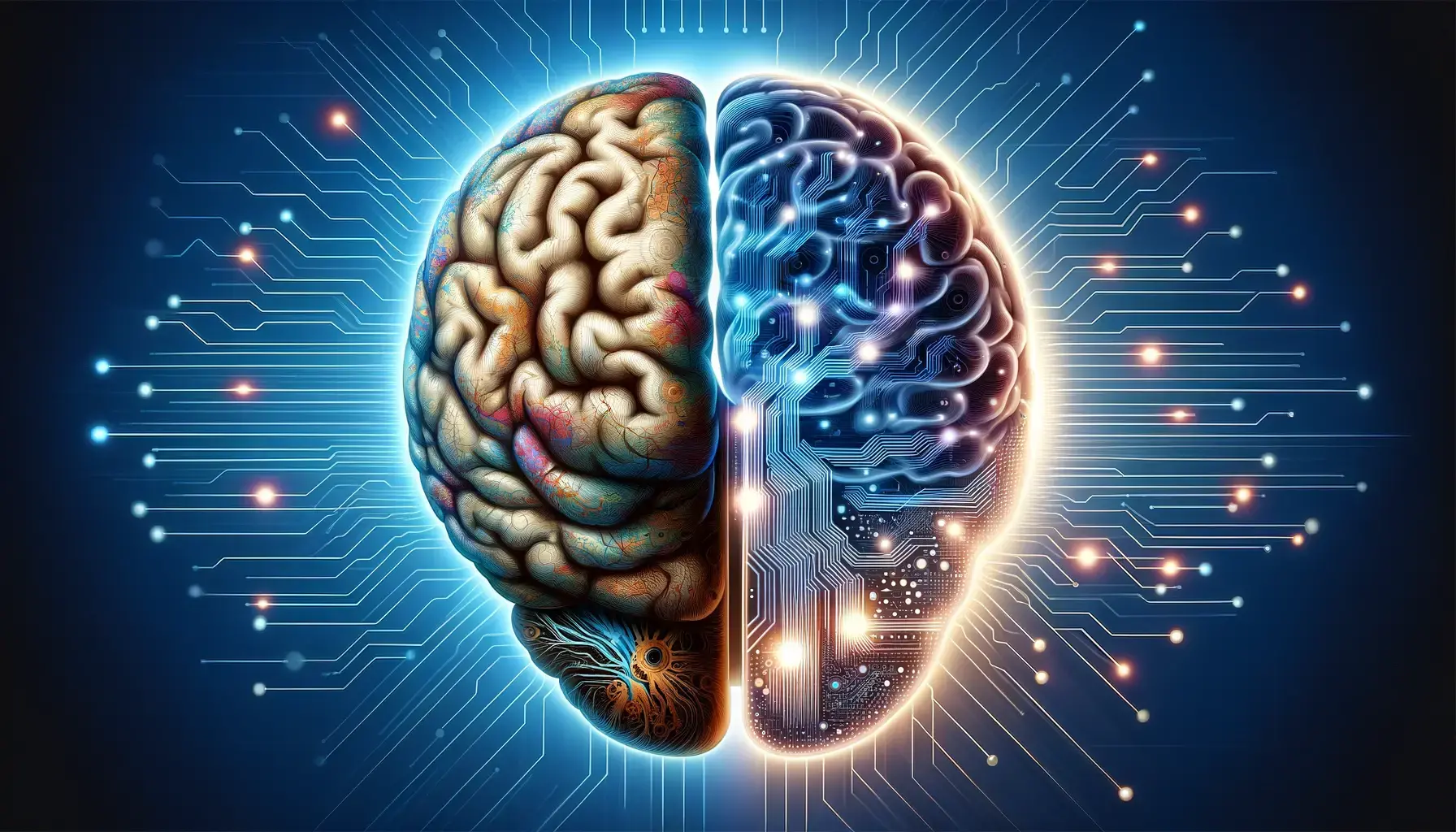
By the age of 18, the human mind has processed an impressive total of approximately 2.84 billion “frames” — a vast collection of images, sounds, touches, and other perceptions that define our life experience 🌟. This torrent of information is captured through a remarkable process of self-supervised learning, which begins in the earliest moments of existence 👶 and continues uninterrupted 🚀. A simple calculation illustrates the scale of this phenomenon:
18 years × 365 days 🌞 × 12 hours ⏰ × 3600 seconds ⏳ × 10 frames per second 🎞️ = 2.84 billion frames.
But what do these “frames” actually mean? They are much more than mere snapshots of reality 📸. Every sound that enters our ears 🔊, every image that catches our gaze 👀, every sensation that brushes against our skin 🖐️ contributes to building a complex mosaic of the world around us 🌍. Through these interactions, our brain 🧠 learns to decode the environment 🌱, anticipate events 🔮, and develop more nuanced responses 🏃♂️. It is an ongoing journey of refinement ✨, where each experience enriches our ability to understand and adapt to the infinite facets of existence 🌏.
In a way, this process is similar to how artificial intelligence (AI) 🤖 is trained to “learn” from data 💻. An AI model, fed with billions of examples 📚 — images, texts 📝, or sounds 🔊 — processes the information to identify patterns 🔍 and make predictions 🎯. However, there is a fundamental difference: while AI relies on predefined datasets 📊 and clear objectives set by programmers 💼, the human mind 🌟 explores the world with a free curiosity 💡, guided by emotions ❤️, intuition 🌈, and unpredictable contexts 🌀. If an AI were to process 2.84 billion frames, it would do so with cold efficiency ⚙️, optimizing parameters mechanically ⚡. In contrast, humans transform these frames into a living story 📖 — a tapestry woven not just from data, but from dreams 💭, fears 😱, and hopes 🌠.
Thus, the 2.84 billion frames accumulated in the first 18 years are not just an impressive statistic 📊; they represent the very essence of our becoming 🌱. Beyond the numbers, these sensory moments create a profound reservoir of knowledge 📚 and adaptability 🔄, incomparable to any algorithm 🧩. Whether we’re talking about the hum of a quiet morning 🌅 or the texture of a hand guiding our first steps 👣, each frame adds a subtle note to the symphony of our lives 🎶. Unlike AI, which simply “learns” from what it is given 🧠, we, humans, give meaning to the world 🌍, transforming perceptions into wisdom 🧘♂️ and experiences into identity 💖. In the end, it’s not just about what we’ve perceived 👀, but how these perceptions have shaped us 💪, transforming us into beings capable of exploring and conquering the vastness of the world 🌎.
Your email address will not be published. Required fields are marked *